ERIVAN: On April 24, 2025, Armenians around the world will mark the 110th anniversary of the genocide that claimed the lives of more than 1.5 million of their compatriots. In Yerevan, the highest state authorities paid tribute to the victims, and testimonies of survivors recall the unhealed wounds of history.
Description of Content
Armenian authorities pay tribute to the victims
Armenian President Vahagn Khachaturian, Prime Minister Nikol Pashinyan and Parliament Speaker Alen Simonian visited the Armenian Genocide Museum-Institute in Yerevan on April 23, 2025. They attended the opening of a temporary exhibition entitled „Documenting the Crime: Witnesses of the Armenian Genocide,” commemorating the 110th anniversary of the tragic events. Earlier, they laid wreaths at the monument to the victims in the Tsitsernakaberd complex.
The exhibition presents some 70 eyewitness accounts – diaries, memoirs, diplomatic reports, photographic and film footage – documenting the genocide from the perspective of people from different corners of the world.
What was the Armenian Genocide?
The Armenian Genocide was the systematic extermination of more than 1.5 million Armenians by the Mlodoturk government in the Ottoman Empire, beginning in 1915 during World War I.
Stages of the genocide:
- Arrests of intellectuals: On April 24, 1915, hundreds of Armenian intellectuals and social leaders were arrested in Constantinople and later murdered.
- The Armenian Genocide was a major stage of the genocide.
- Forced mobilization and executions: Approximately 60,000 Armenian men were conscripted into the Turkish army, disarmed and murdered.
- Deportations and massacres: Women, children and the elderly were deported to the Syrian desert, where many died at the hands of soldiers, police and Kurdish and Cherokee bands.
- Forced Islamization: Thousands of women and children were forced to convert to Islam.
- Denial of the crime: To this day, the Turkish government denies that the genocide took place, despite ample evidence and international recognition.
In 1948, the UN adopted the Convention on the Prevention and Punishment of the Crime of Genocide, recognizing such actions as an international crime.
Araksi Demirchjan’s testimony: the fight to recover her heritage
90-year-old Araksi Demirczjan of Giumri, a descendant of genocide survivors, expresses hope for the recovery of her mother Mariam Khachikian-Demirczjan’s estate, which was taken from her during the deportation. „I want the world to know what we lost and how long we have been fighting for justice,” she said in an interview with Armenpress.
Araksi’s family comes from Kharberd, a city in the Ottoman Empire. Her grandmother, Marta Khachikian, fled to Aleppo with her daughters after losing her husband during the genocide. In 1929, Marta officially asked the Aleppo authorities to restore her rights to the property she left behind in Turkey, but the matter was not resolved.
In 1946, the Demirchjan family repatriated to Armenia. „I was nine years old when we arrived in Armenia. We were happy to be back home,” – Araksi recalls. Her mother’s original will, translated into Armenian, is now kept at the Armenian Genocide Museum-Institute. The document indicates that the family’s estate in Kharberda was worth 18,000 Turkish Liras in 1929.
Over the years, Araksi has approached many organizations in Armenia and abroad, and even visited Turkey to meet with lawyers, but no practical steps have been taken. „I made a deal with God that I would not die until I recovered these assets. As soon as I recover them, I will donate them to orphanages and nursing homes for the elderly. This is my duty,” she added.
.
International recognition and controversy
The fact of the Armenian Genocide has been recognized by many countries and international organizations. Official recognition has been expressed by France, Russia, the United Kingdom, Germany, Italy, Belgium, the Netherlands, Sweden, Greece, Lithuania, as well as the Vatican, the European Parliament and the United Nations, among others.
In North America, recognition has been expressed by both the United States (officially in 2021 by President Joe Biden) and Canada. In Latin America – Argentina, Brazil and Chile, among others.
In Latin America.
Despite these acknowledgements, Turkey invariably refuses to accept responsibility, maintaining the narrative that the Armenian deaths were the result of warfare and chaos, not a planned extermination. The Turkish government undertakes intensive diplomatic, legal and media efforts to counter international recognition of the genocide – including through lobbying, propaganda and pressure on other countries.
This split in international attitudes not only complicates Turkey’s relations with Armenia, but also poses an obstacle to the process of reconciliation and stabilization in the South Caucasus.
Poland Remembers: Sejm Condemns Armenian Genocide
Poland was one of the first countries in Central and Eastern Europe to recognize the tragic events of 1915-1923 as genocide. In 2005, the Sejm of the Republic of Poland unanimously passed a resolution condemning the mass murder of Armenians by the Ottoman Empire.
The resolution reads, among other things:
„The Sejm of the Republic of Poland pays tribute to the victims of the first genocide of the 20th century – the Armenian genocide committed by the Ottoman Empire between 1915 and 1923. We recall this crime in order to honor the memory of those murdered and prevent similar tragedies in the future.”
This important position of Poland was welcomed by the Armenian diaspora and the Armenian authorities. Poland, as a country experiencing its own historical tragedies, has expressed its solidarity with the Armenian people and its commitment to the defense of historical truth and human rights.
Memory as commitment
The commemoration of the 110th anniversary of the Armenian Genocide is not only an opportunity to honor the victims and listen to testimonies, such as the account of Araksi Demirchian. It is also a time to reflect on the responsibility of the modern world to fight for truth and justice.
Despite the passage of decades, history still lives in the hearts of Armenians. Their voice demands not only remembrance, but also recognition, which is the foundation for reconciliation and lasting peace.
The Armenian people’s voice is not only a memory, but also a recognition that is the foundation for reconciliation and lasting peace.
.
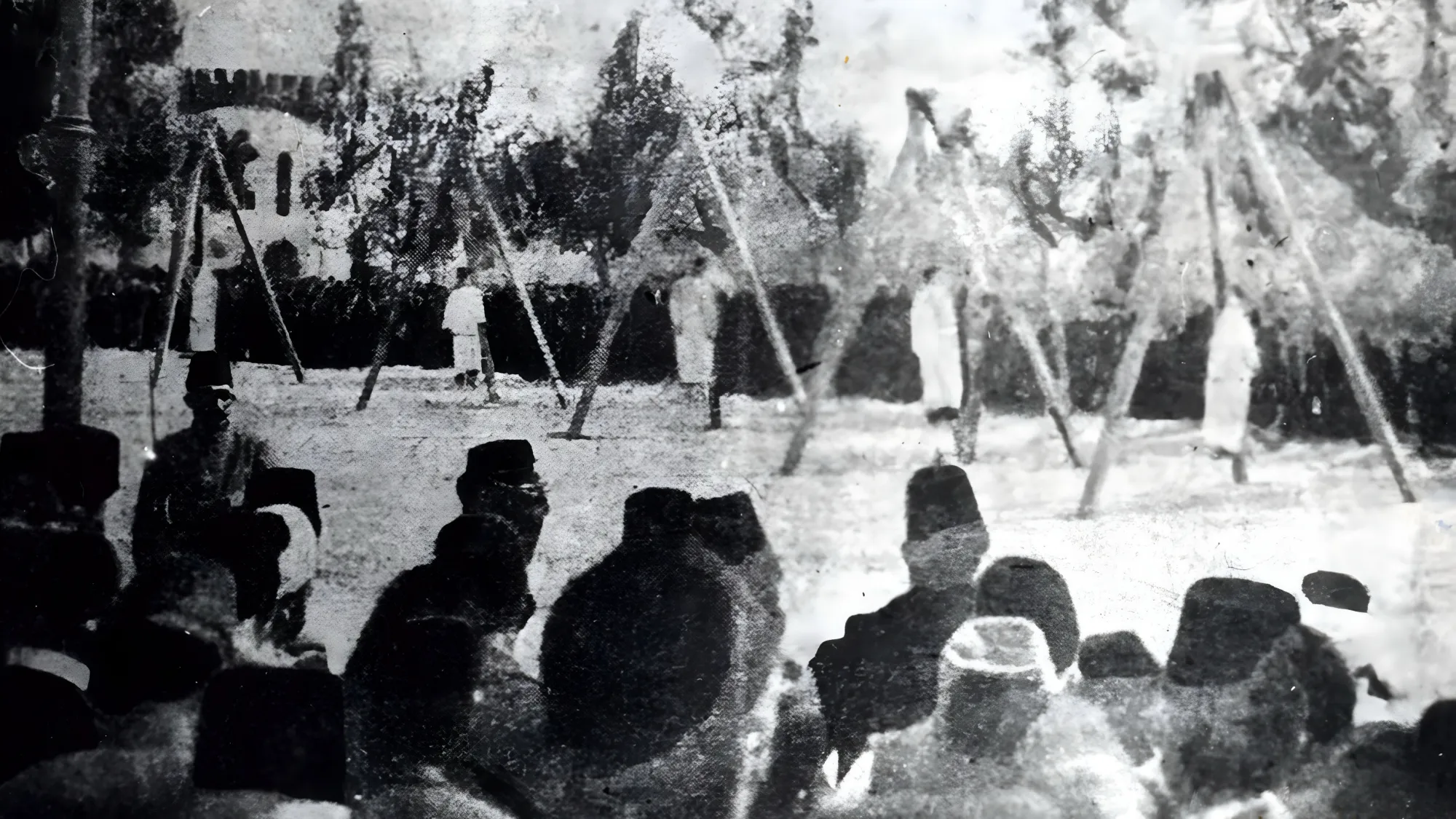
Polish News /IKS/ source: Wikipedia, Armenpress / Photo Armenia, Armenian Genocide. Hanging of twenty Armenians on Sultan Bayezid Boulevard in Istanbul. Turkey, 1913., author unknown, source: Wikipedia / 24.04.2025
Armenian Genocide article Armenian Genocide – 110th Anniversary. Remembrance, testimonies and the struggle for justice is from Information Agency.